If you need tyre services in London soon, start with the basics. Good tyres help you stop, steer and stay stable in traffic. This guide explains your options in plain language. It covers fitting, repairs and replacement. It also covers simple checks you can do yourself. By the end, you will know what to ask and when to act.
London driving makes its own demands on tyres. Journeys are often short, crowded and stop-start. Roads can be wet, uneven or damaged by potholes. Because of that, small tyre problems can grow quickly. A slow puncture, low pressure or worn tread may affect your journey today, not next month. That is why clear advice matters before you book.
What Tyre Services Include in London
Tyre services cover more than putting a new tyre on a wheel. A good provider should inspect the tyre, the wheel and the valve. They should also explain what they find before they start work. That explanation helps you make a calm, informed choice.
Most visits involve one or more of the following:
- Removing an old or damaged tyre from the wheel
- Fitting a new or repaired tyre correctly
- Replacing the valve, where needed
- Balancing the wheel and tyre assembly
- Checking and setting the tyre pressure
- Inspecting tread depth and visible damage
- Checking for uneven wear across the tread
Balancing deserves a brief mention. A wheel is balanced so that it rotates evenly. If it is out of balance, you may feel vibration through the steering wheel. Balancing is therefore a normal part of proper fitting, not an optional extra to ignore.
Alignment is related, but it is different. Alignment concerns the angles of the wheels and how they point. This guide keeps that topic brief, because we cover it elsewhere. If your car pulls to one side or wears tyres unevenly, read our guide to wheel alignment in London. Ask for an alignment check when those signs appear.
Tyre Fitting: What Happens and What to Ask
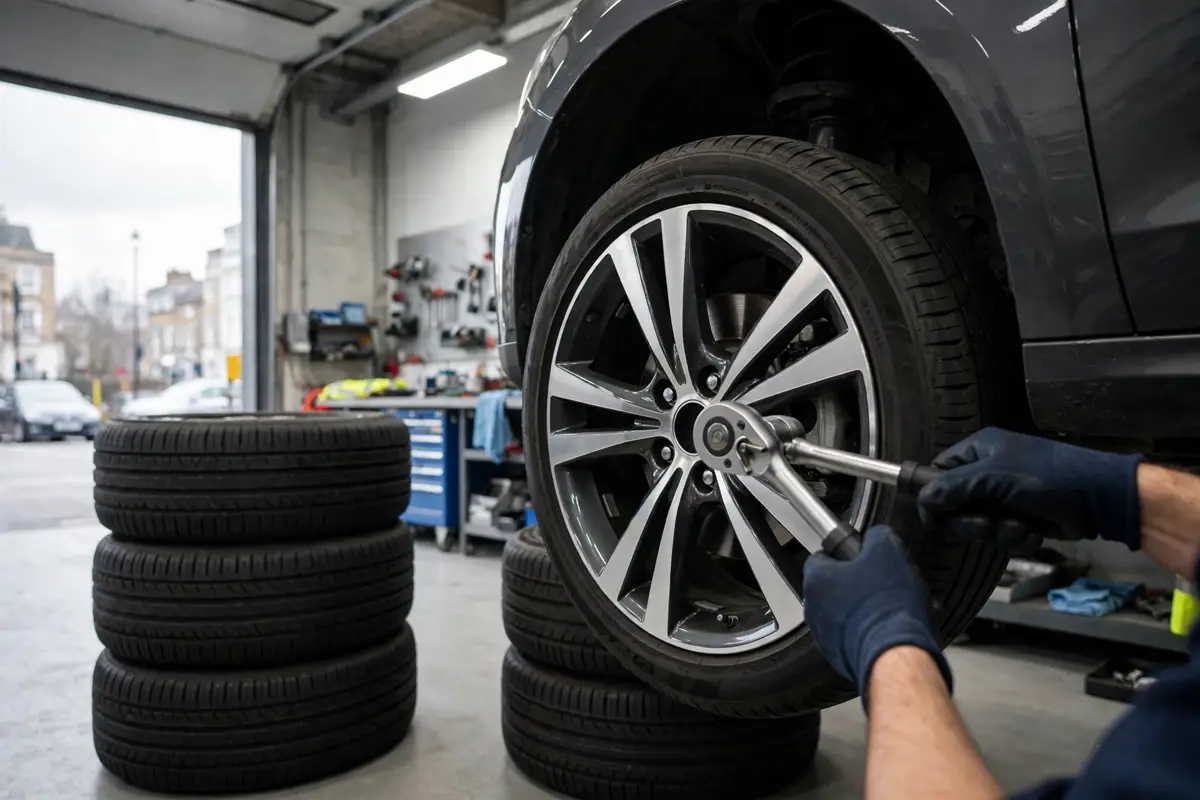
Tyre fitting is the process of mounting a tyre on its wheel. First, the technician removes the old tyre safely. Next, they inspect the wheel for damage or corrosion. Then they fit the new tyre, inflate it and balance the assembly. Finally, they refit the wheel and tighten it correctly.
Before fitting starts, check the details with the provider. Ask whether the price includes the valve, balancing and disposal. Ask also whether the tyre size and speed rating match your car. Those details should match the maker’s guidance for your vehicle. Never accept a substitute without a clear explanation.
Getting the basics right
Tyres should be fitted in matching pairs on the same axle, where possible. Mixing very different tyres can affect grip and handling. The fitter should also check the spare, if your car has one. A spare with low pressure will not help you when you need it most.
After fitting, take a short, careful drive. Listen for new noises and notice any vibration or pulling. If something feels wrong, return promptly and explain the change. A reputable fitter will want to check the work.
When Tyre Replacement Is Needed
Tyre replacement becomes necessary when a tyre is no longer safe or legal. Wear is the most common reason. In the UK, the legal minimum tread depth is 1.6mm. That limit applies across the central part of the tread. Driving below that limit is unsafe and unlawful.
However, you should not wait for the legal limit. Grip falls as tread wears, especially in wet conditions. If tread looks low, book an inspection soon. A simple gauge can measure depth accurately. Many drivers also use tread wear indicators built into the tyre.
Damage, age and other warning signs
Some problems mean replacement, even when tread remains. Look for these warning signs:
- A bulge or blister on the sidewall
- Deep cuts, cracks or exposed cords
- Damage from a pothole or a hard kerb strike
- Repeated pressure loss that cannot be explained
- Uneven wear that points to a wider fault
- Age-related cracking on a little-used tyre
Age matters as well as mileage. A car used rarely in the city can still have old tyres. Rubber hardens and cracks over time. Therefore, ask about age if you buy a used car. Check the sidewall markings, or ask a technician to explain them.
Tyres are also checked during the MOT. If you plan work around test time, our guide to MOT and service in London explains how testing and maintenance fit together. Do not rely on the MOT alone, though. Damage can happen at any time of year.
Tyre Repairs: What Can and Cannot Be Fixed Safely
Not every puncture needs a new tyre. Safe tyre repairs are possible in some cases. Generally, a puncture in the central tread area can be repaired. The repair must meet the relevant British Standard. A technician must inspect the tyre inside and out first.
That internal inspection matters. A tyre run while flat can suffer hidden damage. From outside, it may look repairable. Inside, the structure may already be weakened. For that reason, a proper repair is never just a quick plug from outside.
What usually cannot be repaired
Sidewall damage is not safely repairable. The sidewall flexes constantly as the tyre rotates. It also carries much of the tyre’s structure. So cuts, bulges or punctures there mean replacement. The same applies to large holes, shoulder damage and exposed cords.
Be cautious with temporary sealants and emergency kits. They are designed to help you reach help, not to restore the tyre. Drive gently, follow the kit instructions and get an inspection soon. If a provider says a tyre cannot be repaired, ask them to show you why. A clear view of the damage builds trust.
Choosing Tyres for City Roads and Wet Weather Driving
Choosing tyres for city roads is about grip, strength and comfort. London journeys involve frequent braking, tight turns and slow queues. They also involve speed humps, drain covers and patched surfaces. Your tyres must cope with all of that, every day. Helpful tyre services will explain tyre label information in plain terms.
Wet weather driving places extra demand on tread. The tread clears water from under the tyre. That helps the rubber stay in contact with the road. As tread wears down, that ability reduces. So a tyre that feels fine in the dry may feel less secure in heavy rain.
Matching tyres to London conditions
Start with the correct size and rating for your car. Then consider how and where you drive. A commuter crossing the city daily needs dependable wet grip. A driver making short local trips still needs the same safety basics. Do not choose on price or appearance alone.
Potholes are another factor on city roads. A stronger tyre may cope better with poor surfaces, but none is immune. Slow down for standing water, because it can hide a deep hole. After a hard impact, check the tyre and wheel promptly.
Seasonal choice also deserves thought. Some drivers use all-season tyres for year-round convenience. Others prefer tyres suited to a particular season. Either approach can work when the tyres are suitable and well maintained. Discuss your mileage and typical journeys with the fitter. That conversation is more useful than any general claim.
Pressures and Checks for Commuter Safety
Simple checks support commuter safety better than any gadget. You do not need mechanical skill to spot many problems. You need a few minutes, good light and a regular habit. Check tyres when they are cold, where possible. Regular checks also help you plan tyre services in advance, rather than in an emergency.
A practical five-minute check
- Check pressures against the maker’s guidance, not the tyre sidewall maximum.
- Look for the guidance in the handbook, fuel flap or door frame.
- Walk around the car and inspect each sidewall closely.
- Look for nails, glass, cuts, cracks and bulges.
- Check tread depth across the width of each tyre.
- Notice uneven wear on one edge or in the centre.
- Check that valve caps are present and undamaged.
- Inspect the spare, or check your emergency kit instead.
Pressure matters for safety, comfort and wear. Under-inflated tyres can overheat and wear at the edges. Over-inflated tyres can wear in the centre and feel harsh. Both errors can affect braking and steering. Therefore, use a reliable gauge rather than guessing by sight.
Make checks part of a wider routine. Many drivers combine them with car servicing in London, fuel stops or monthly cleaning. Choose a prompt that you will actually remember. If you find damage, slow down and seek advice before a long journey.
Mobile Tyre Services or a Garage Visit in London?
Mobile tyre fitting brings the service to your home or workplace. That can suit a busy commuter or a car that cannot be driven. The van carries fitting and balancing equipment. You also avoid a trip across the city on a damaged tyre.
A garage visit offers different advantages. A workshop can inspect the car on a lift. It can also check brakes, steering and suspension in one visit. That matters after a pothole strike or when wear looks uneven. A garage may also hold a wider range of tyres.
Neither option is automatically better. Choose according to the problem, not habit alone. Ask what the service includes and what happens if extra damage is found. Also ask how long the work will take. Clear answers help you plan your day.
What Affects the Cost of Tyre Services?
Costs vary, and this guide gives no fixed prices. Several factors explain the difference. Tyre size is one factor, because larger tyres usually cost more. Brand tier is another, from budget to premium ranges. Performance, load rating and special designs also play a part.
Run-flat tyres can cost more than standard tyres. So can tyres for heavier vehicles or electric cars. Fitting needs, balancing and disposal may be included or listed separately. Therefore, compare like with like when you compare quotes. Ask for the full fitted cost in writing before work begins.
Remember that the cheapest tyre is not always the best value. A tyre that wears quickly may need replacing sooner. Good advice, correct fitting and proper pressures protect your spending. They also protect everyone travelling with you.
Keeping London Journeys Safer
Good tyre care is a habit, not a one-off task. Check pressures and tread regularly. Act quickly when you see damage or feel a change. Use tyre services before a small fault becomes an emergency at the roadside.
For London drivers, the message is simple. Choose tyres suited to city roads and wet weather driving. Keep up with tyre fitting, tyre repairs and tyre replacement when they are due. Ask clear questions and expect clear answers in return. With those basics in place, commuter safety improves on every journey, short or long.