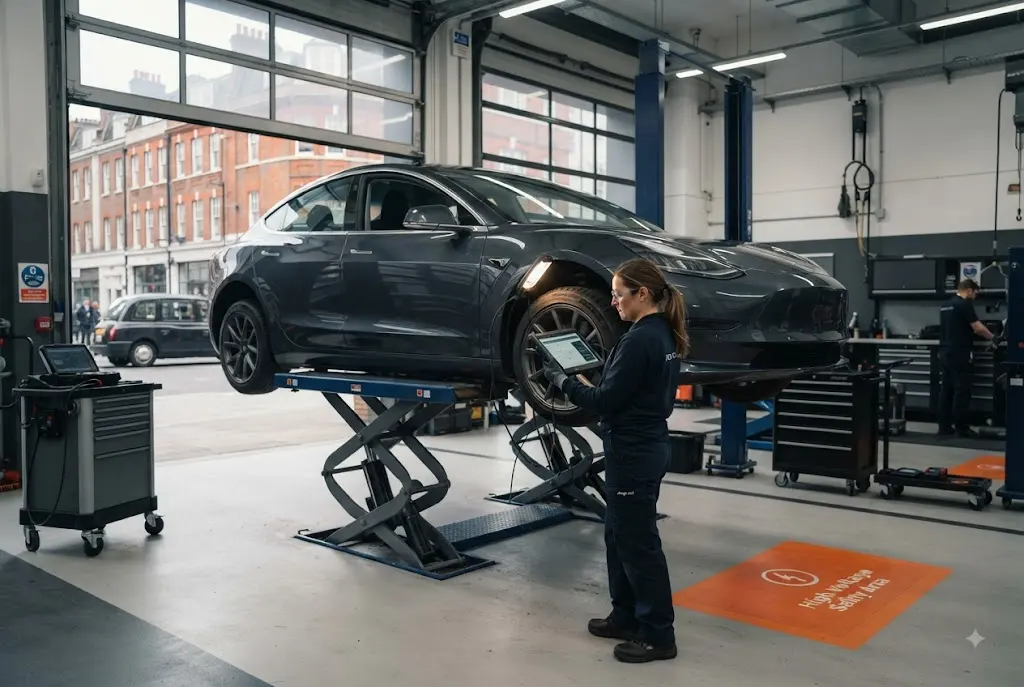
EV servicing is becoming an increasingly important part of vehicle ownership in London as more motorists switch from petrol and diesel cars to fully electric vehicles. Electric cars have fewer conventional drivetrain components, but they still require professional inspections, tyre checks, brake maintenance, diagnostics and attention to their high-voltage electrical systems.
For London EV drivers, choosing the right garage is particularly important. Not every workshop has the training, equipment or experience required to work safely on an electric vehicle. Understanding what servicing involves can help owners make better decisions about maintenance, repairs and long-term vehicle care.
Why EV Servicing Matters in London
Electric vehicles are often associated with lower routine maintenance requirements because they do not use a conventional petrol or diesel engine. There is no engine oil to replace, and many traditional engine components are absent.
That does not mean an EV can simply be driven without regular maintenance. Electric vehicles still use tyres, suspension, steering, braking components, cooling systems, lights and other equipment that need inspection.
London’s urban environment can make these checks especially relevant. Frequent stop-start traffic, potholes, kerb impacts and short journeys can all affect vehicle components over time.
Regular servicing provides an opportunity to identify developing problems and confirm that important safety systems remain in good condition.
What Does EV Servicing Include?
The exact maintenance schedule varies between manufacturers and models. Drivers should therefore follow the servicing information supplied for their particular vehicle.
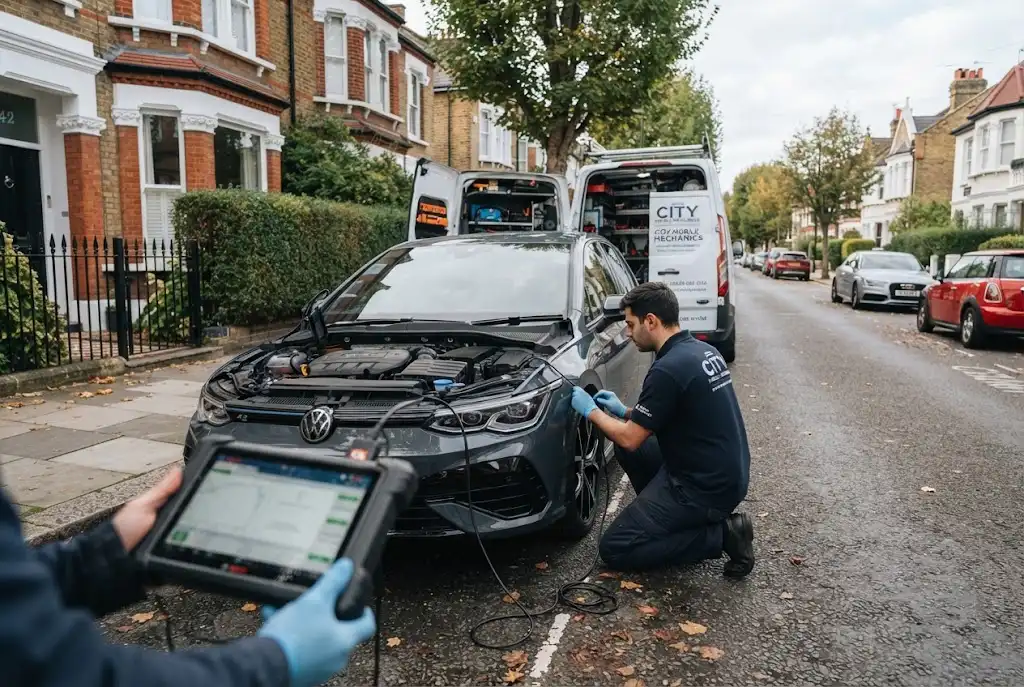
A typical EV inspection may include checks of tyres, brakes, steering, suspension, lights, windscreen equipment, cooling systems and electronic systems. Diagnostic equipment may also be used to identify faults that are not visible during a basic inspection.
High-voltage components require additional safety procedures. The Health and Safety Executive explains that electric and hybrid vehicles contain significantly higher voltages than conventional 12- or 24-volt vehicle systems and that repair workers need appropriate skills, knowledge and specialist equipment.
Battery System Checks
The high-voltage battery is one of the most important components in an EV. It stores the energy used to power the electric drivetrain, so its condition can have a major impact on vehicle operation.
Battery-related servicing does not necessarily mean opening or repairing the battery pack. In many situations, technicians may use diagnostic systems to identify faults, monitor relevant data or inspect associated components.
Drivers should never attempt to open or repair a high-voltage battery themselves. Where high-voltage work is required, it should be handled by appropriately trained professionals using suitable procedures and equipment.
Choosing EV Mechanics in London
One of the most important decisions for an electric vehicle owner is choosing suitable EV mechanics. A garage may be perfectly capable of servicing conventional cars without necessarily having the skills required for high-voltage EV work.
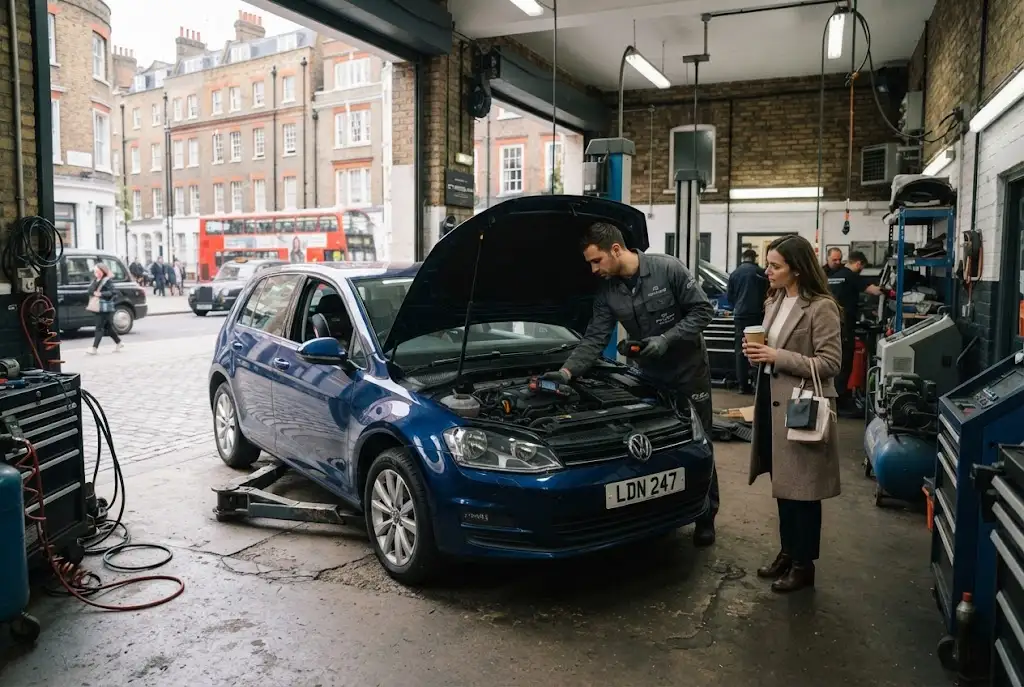
Before booking, ask whether the workshop regularly works on electric vehicles and whether its technicians have appropriate EV training. It is also worth asking whether the garage can diagnose the specific make and model of your car.
For routine work such as tyres or general inspections, a broader automotive business may be suitable. More complicated electrical faults or battery-related work may require a specialist EV technician or an authorised service centre.
Questions to Ask an EV Garage
- Does the garage regularly service electric vehicles?
- Are technicians trained to work safely around high-voltage systems?
- Can the workshop diagnose EV-specific warning lights?
- Does it have suitable diagnostic equipment for your vehicle?
- Can it carry out the manufacturer’s recommended service checks?
- Will additional repairs be explained before the work is authorised?
These questions can help distinguish a workshop that simply accepts EVs from one that has genuine experience maintaining them.
Electric Vehicle Maintenance Beyond the Battery
Electric vehicle maintenance involves considerably more than checking the main battery. Several conventional vehicle components remain important even though the powertrain is different.
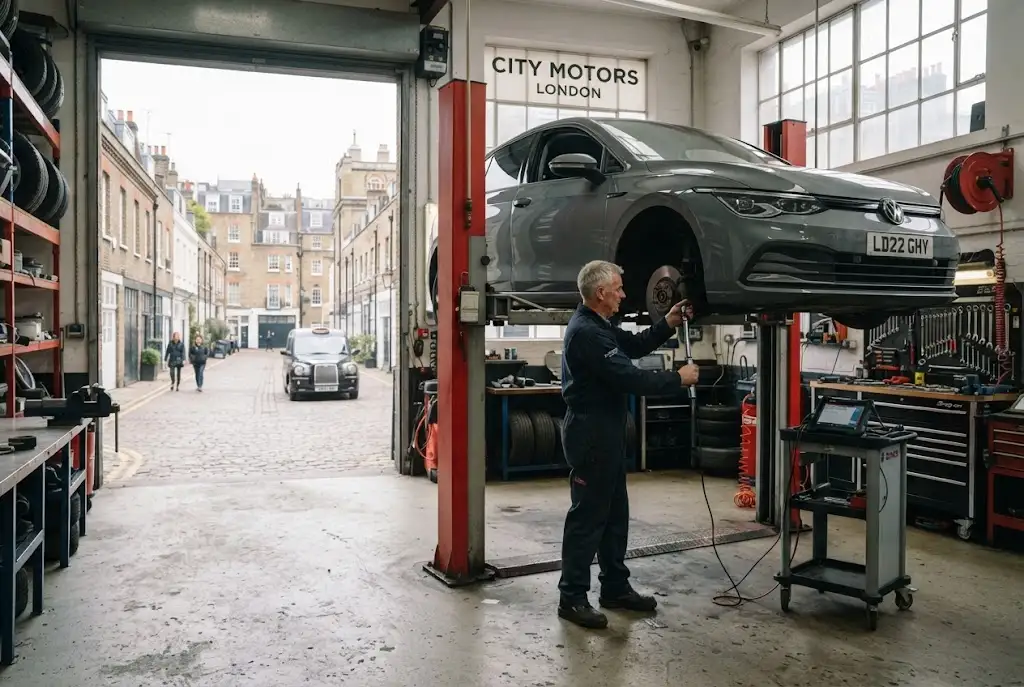
Tyres are particularly important because an EV can place different demands on them depending on the vehicle’s weight, torque delivery and driving style. Correct pressure, tread condition and overall tyre health should be checked regularly.
Brakes also deserve attention. Many EVs use regenerative braking, which can reduce the amount of work performed by conventional friction brakes during some driving conditions. However, the mechanical braking system remains an important safety component and should still be inspected.
Suspension and steering components can also suffer from potholes and kerb impacts. If the vehicle begins pulling to one side, develops unusual noises or shows uneven tyre wear, it should be inspected.
EV Batteries and High-Voltage Safety
High-voltage systems are one of the biggest differences between EV maintenance and conventional car servicing. The HSE notes that electric and hybrid vehicles can contain high-voltage components capable of causing serious electric shock, while batteries can also store substantial amounts of energy.
This is why high-voltage electrical work should not be treated like an ordinary DIY vehicle repair. Technicians may need specialist tools, insulated equipment, vehicle-specific information and procedures for isolating and testing the electrical system.
Government guidance also recognises the specialist requirements associated with EV batteries and high-voltage equipment. Work involving testing, charging, discharging or dismantling EV batteries should be undertaken by appropriately trained and qualified technicians.
For owners, the practical lesson is simple: choose a workshop that can demonstrate appropriate EV competence when the job involves the high-voltage system.
Charging Infrastructure and Vehicle Maintenance
Charging infrastructure is another important part of EV ownership in London. Drivers increasingly rely on a combination of home charging, workplace facilities and public charge points depending on their circumstances.
Transport for London has recognised the importance of developing charging infrastructure that supports residents, commercial fleets and different types of EV users across the capital.
Charging equipment is not normally part of a standard mechanical service in the same way as tyres or brakes. However, drivers should pay attention to charging behaviour. If a vehicle repeatedly fails to charge, reports a charging fault or behaves differently when connected to a charger, the issue should be investigated.
It is also useful to distinguish between a vehicle problem and a charger or infrastructure problem. If an EV charges normally at one location but repeatedly fails at another, the charging equipment may need investigation rather than the vehicle itself.
EV Servicing and London Driving Conditions
London’s roads can create maintenance challenges regardless of the powertrain. Potholes, speed humps, congestion and frequent braking can gradually affect tyres, wheels, suspension and steering.
EV drivers should pay attention to changes in handling. A new vibration, steering imbalance or uneven tyre wear can indicate an issue that deserves professional inspection.
Wheel alignment can also be relevant after a significant pothole or kerb impact. Our guide to wheel alignment in urban traffic explains how alignment problems can contribute to uneven tyre wear and handling issues.
EV Servicing and MOT Requirements
Electric vehicles are still subject to MOT requirements where applicable. The fact that an EV has no conventional engine does not remove the need to maintain the vehicle in a roadworthy condition.
Government MOT guidance includes checks relevant to electric and hybrid vehicles, including battery-related inspection requirements. Propulsion batteries can carry high voltage, so additional care is required when they are inspected.
Owners should therefore keep their EV maintained throughout the year rather than relying on the MOT as their only maintenance check.
The GOV.UK guidance on vehicle safety also reminds drivers that having a current MOT does not automatically mean a vehicle is safe to drive. Routine checks of tyres, brakes, lights and other equipment remain important.
When an EV Needs Specialist Attention
Some warning signs should prompt an owner to seek professional advice rather than continuing to drive normally.
These can include persistent battery or powertrain warnings, unusual charging behaviour, significant reductions in expected performance, electrical warning messages, unexplained noises or visible damage around areas associated with the high-voltage system.
Accident damage deserves particular caution. If an EV has suffered a significant collision, the battery enclosure, high-voltage cables or other electrical components may have been affected even when damage is not immediately obvious.
In such circumstances, the vehicle should be assessed by suitably qualified professionals who understand the relevant high-voltage safety procedures.
EV Servicing Costs in London
The cost of maintaining an EV varies according to its make, model, age, mileage and service requirements. There is no single servicing price that applies to every electric car.
Some routine maintenance can be simpler than equivalent work on an internal combustion vehicle because EVs have fewer conventional engine components. However, specialist diagnostics or high-voltage repairs can require specific expertise and equipment.
Drivers should therefore compare garages based on technical capability as well as price. A very cheap service is not necessarily good value if the workshop lacks appropriate EV equipment.
For larger repairs, ask for a clear estimate and confirm whether additional work will require your approval. Keeping service records can also make future maintenance easier to plan.
EV Servicing for Different Types of London Drivers
Not every EV owner uses their vehicle in the same way. A commuter travelling across London every weekday may place different demands on the vehicle from someone who mainly uses an EV for occasional journeys.
High-mileage drivers should pay particular attention to tyre condition, braking performance and scheduled inspections. Drivers using public charging frequently may also want to monitor charging performance and report recurring faults quickly.
Commercial and fleet operators have additional considerations because vehicle downtime can affect business operations. A reliable maintenance schedule can help reduce unexpected interruptions and make servicing easier to coordinate.
EV Servicing and Clean Transport
The growth of electric vehicles is part of London’s wider move towards clean transport. Electric vehicles produce no tailpipe emissions while being driven, although the wider environmental impact of a vehicle depends on factors including how electricity is generated, manufacturing and battery production.
For individual drivers, keeping an EV properly maintained is still important. A vehicle that is reliable, roadworthy and operating as designed is better suited to everyday urban transport.
As London’s charging network continues to develop, motorists also need reliable garages that understand the technology behind modern electric vehicles. Maintenance expertise will become increasingly relevant as more vehicles with high-voltage powertrains remain on the road for longer.
How to Prepare for an EV Service
Before taking your car to a garage, make a note of any warning messages, charging problems or changes in vehicle behaviour. Tell the technician when the issue occurs and whether it happens consistently or only under particular conditions.
Bring relevant service information where available and make sure the garage knows the vehicle’s exact model and specification. If the vehicle has recently experienced a collision, pothole impact or charging problem, mention this during the booking.
Clear information can help the technician understand the problem and decide which checks are appropriate.
Final Thoughts on EV Servicing in London
EV servicing is becoming a normal part of vehicle ownership as electric cars become more common on London’s roads. Although EVs generally have fewer conventional drivetrain components, they still require professional maintenance covering tyres, brakes, suspension, steering, cooling systems and electronic equipment.
The most important difference is the presence of high-voltage electrical systems. Work involving these systems should be handled by appropriately trained technicians with suitable tools, equipment and vehicle-specific information.
When choosing a garage, consider its EV experience rather than relying solely on price or location. Ask whether the technicians can work safely on your vehicle and whether the workshop has appropriate diagnostic capabilities.
For London EV drivers, good maintenance is ultimately about more than preventing breakdowns. It supports safe urban driving, protects the vehicle’s long-term condition and helps electric mobility remain a practical part of the city’s changing transport landscape.