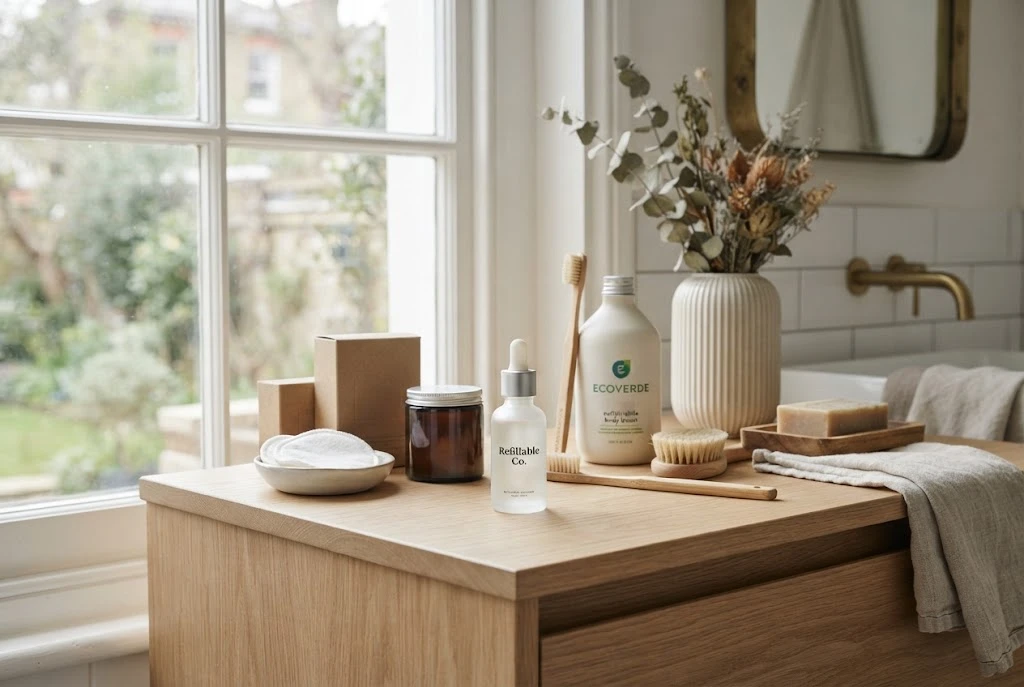
Sustainable beauty is becoming an increasingly important part of the cosmetics conversation in the UK. Consumers are paying closer attention to packaging, ingredients, product longevity and the environmental impact of their purchasing decisions. However, sustainable beauty is not simply about buying products labelled “green” or “eco-friendly”. A genuinely more responsible routine requires looking at the entire product lifecycle, from sourcing and formulation to packaging, transportation, use and disposal.
For shoppers, this can make sustainability feel complicated. Fortunately, small and practical changes can make a beauty routine more considered without requiring people to abandon the products they already enjoy. The key is learning how to identify meaningful improvements rather than relying on vague environmental marketing.
What Does Sustainable Beauty Mean?
Sustainable beauty describes approaches to cosmetics, skincare, haircare and personal care that aim to reduce environmental impact while maintaining appropriate product performance and safety.
There is no single definition that makes a beauty product completely sustainable. A product may use recycled packaging but contain ingredients with a different environmental profile. Another product may use a refill system but require significant resources during manufacturing or transportation.
For that reason, sustainable beauty is best viewed as a collection of decisions rather than a simple product category. Packaging, ingredients, manufacturing, water use, waste, transportation and how long a product is used can all contribute to its overall environmental footprint.
Why Sustainable Beauty Matters in the UK
The UK has a large and diverse beauty market, giving consumers access to thousands of skincare, cosmetics, haircare and personal-care products. That variety creates choice, but it can also encourage frequent purchasing and product replacement.
Environmental considerations are increasingly influencing how consumers think about those purchases. Packaging waste is particularly visible because beauty products often involve bottles, tubes, jars, cartons and other components.
However, packaging is only one part of the equation. A more complete approach considers whether a product is genuinely needed, how efficiently it is packaged, how long it lasts and whether its components can realistically be reused or recycled.
This broader perspective is important because sustainable beauty should not become another reason to purchase unnecessary products. In many cases, using an existing product fully before replacing it can be a simple sustainability decision.
Sustainable Beauty Packaging: What Should Shoppers Look For?
Packaging is one of the easiest aspects of a beauty product to see, which is why it often receives significant attention in sustainability marketing. Yet packaging materials can be difficult to compare without understanding how they are designed and handled after use.
Use less packaging where possible
Reducing unnecessary packaging can be a straightforward improvement. A product that uses a compact container and minimal secondary packaging may require fewer materials than one surrounded by several layers of presentation packaging.
That does not mean minimal packaging is automatically better in every situation. Packaging also protects formulas from contamination, damage and environmental exposure. Good design needs to balance protection with material efficiency.
Look beyond the recycling symbol
A recycling symbol does not necessarily mean that an item will be accepted through every household recycling system. Local recycling infrastructure can differ, and beauty packaging may contain combinations of materials that make processing more difficult.
UK consumers should therefore check the disposal guidance provided by the brand and their local authority rather than assuming every cosmetic container can go into the household recycling bin.
Consider refill systems carefully
Refillable packaging can reduce the need to manufacture a completely new outer container each time a product is purchased. However, the environmental benefit depends on how the refill system is designed and how frequently the original packaging is reused.
The practical question is simple: will the consumer actually use the refill system repeatedly? A refill option only becomes meaningful when it changes purchasing behaviour.
Eco Friendly Beauty Without Buying More
One of the most useful principles of eco friendly beauty is also one of the simplest: buy only what you are likely to use.
The beauty industry is highly trend-driven. New launches, limited editions and viral products can create a sense that consumers constantly need something different. Yet replacing half-used products simply because a new version is fashionable can increase waste.
Before purchasing, consider whether the product fills a genuine gap in your routine. If it duplicates something already on your shelf, waiting until the existing product is finished may be the more sustainable option.
This approach also connects with the broader beauty trends UK audiences are following. A trend can be interesting without requiring consumers to purchase every product associated with it.
Sustainable Cosmetics and Ingredients
Ingredients are another important part of sustainable cosmetics. Consumers may encounter claims involving natural ingredients, plant-based formulas, responsibly sourced materials or biodegradable components.
However, “natural” does not automatically mean environmentally preferable. An ingredient’s environmental profile can depend on how it is grown or extracted, how much land and water it requires, how it is processed and how far it travels.
Synthetic ingredients should not automatically be considered environmentally harmful either. Modern cosmetic chemistry can produce highly effective ingredients with carefully controlled properties.
The better approach is to evaluate the complete formulation and the evidence behind a brand’s environmental claims rather than judging a product solely by whether its ingredients sound natural.
Why ingredient research matters
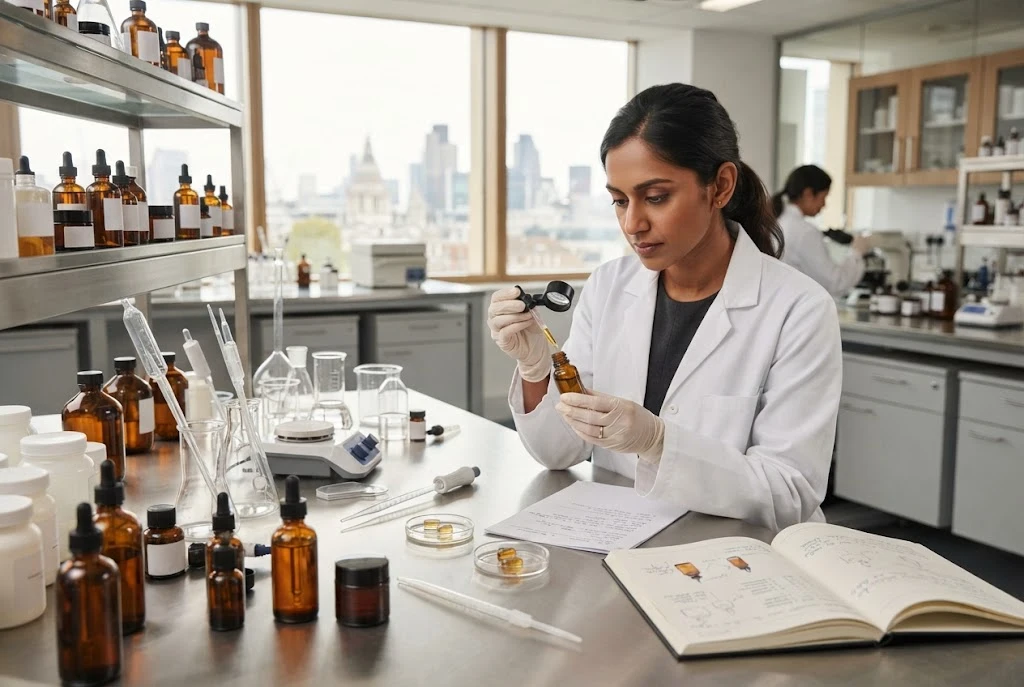
Consumers who want to investigate cosmetic ingredients more deeply can benefit from understanding beauty research. Scientific research can provide useful context around ingredient safety, formulation and performance, while sustainability assessments require additional information about sourcing and environmental impact.
Separating these questions is important. An ingredient can be safe and effective while still raising environmental questions, just as an environmentally attractive material still needs to perform appropriately in a cosmetic formula.
Zero Waste Beauty: Is It Realistic?
Zero waste beauty is an appealing idea, but achieving literally zero waste can be difficult within a modern cosmetic routine. Beauty products require packaging for practical reasons, and many consumers depend on products that need hygienic containers and controlled formulations.
Instead of pursuing perfection, a realistic zero waste beauty approach focuses on reducing avoidable waste.
Consumers can start by finishing products completely, avoiding unnecessary duplicates, choosing durable tools, following appropriate disposal guidance and considering refill systems where they genuinely reduce packaging consumption.
Reusable accessories can also have a role. However, reusable does not automatically mean sustainable if an item is purchased but rarely used. The environmental value comes from replacing repeated disposable consumption over a meaningful period.
How to Build a More Sustainable Skincare Routine
A sustainable skincare routine does not need to contain unusual products. In fact, simplifying a routine can sometimes make sustainability easier.
Start by identifying the products that genuinely serve a purpose. A basic routine might involve cleansing where appropriate, moisturising and protecting exposed skin from ultraviolet radiation, with additional products selected according to individual needs.
Once the routine is established, avoid adding products simply because they are trending. Give each product enough time to be used properly rather than continually switching between alternatives.
Storage also matters. Keeping products in appropriate conditions can help maintain their quality and prevent premature disposal.
How Sustainable Beauty Packaging Can Reduce Waste
Packaging decisions become more meaningful when they are considered over the entire period a product is used.
A durable container that is repeatedly refilled may reduce the need for new packaging. Concentrated formulas can potentially reduce the amount of material required for transport, although their overall environmental performance depends on formulation and manufacturing.
Packaging that is easy to empty can also help consumers use more of the product before disposal. This is a small design detail, but it can reduce the amount of product left behind in containers.
Consumers should therefore consider functionality alongside material labels. A beautifully marketed “eco” package is not necessarily the best choice if the design encourages frequent replacement or cannot be realistically reused or disposed of.
Green Beauty Claims: What Should You Question?
Green beauty has become a powerful marketing category, which makes careful evaluation increasingly important.
Terms such as “clean”, “green”, “natural”, “planet-friendly” and “eco-conscious” can communicate an environmental impression without necessarily explaining the specific improvement being made.
Look for concrete information instead. Does the brand explain what material its packaging contains? Is recycled content specified? Does it provide instructions for refilling or disposal? Are sustainability claims supported by measurable information?
The UK’s Competition and Markets Authority has published guidance for businesses making environmental claims, stressing that green claims should be truthful and clear and should not mislead consumers. ([gov.uk](https://www.gov.uk/government/publications/green-claims-code-making-environmental-claims/green-claims-code-making-environmental-claims))
This is particularly useful for beauty shoppers because attractive environmental language can otherwise make products difficult to compare objectively.
Beauty Carbon Footprint: Looking Beyond the Product
A beauty product’s environmental impact does not stop at the packaging. Manufacturing, ingredient sourcing, energy use, transportation and disposal can all contribute to its wider footprint.
That makes carbon emissions difficult to judge from a product label alone.
For example, a lightweight package may reduce material use, but its environmental performance also depends on the materials and processes involved. Similarly, local sourcing can reduce some transportation requirements, but the total environmental impact depends on the complete supply chain.
Consumers should therefore be cautious about claims that a single packaging change makes a product completely sustainable.
Circular Beauty and the Future of Cosmetics
Circular beauty focuses on keeping materials and products in use for longer and reducing the amount of waste sent for disposal. Refill systems, reuse models, recycled materials and improved recovery processes can all contribute to this approach.
The idea is particularly relevant to packaging because conventional beauty consumption can involve repeatedly purchasing a new container for every replacement product.
A circular model attempts to change that relationship. Instead of treating packaging as something disposable, brands can design systems that allow containers or materials to remain useful for longer.
However, circular beauty depends on consumer participation as well as product design. Refill stations, take-back schemes and recycling systems only work effectively when consumers can access them and understand how to use them.
How to Shop More Sustainably for Beauty Products
There is no need to transform an entire beauty routine overnight. A few practical questions can make future purchases more considered.
1. Do I actually need the product?
Reducing unnecessary purchases is often the easiest place to start. Use existing products before buying replacements whenever practical.
2. Can I buy a refill?
If a product has a credible refill option, investigate how the system works and whether you are likely to use it repeatedly.
3. Can I dispose of the packaging properly?
Check local recycling guidance and the manufacturer’s disposal instructions. Do not assume every cosmetic package belongs in household recycling.
4. Is the environmental claim specific?
Look for measurable information instead of relying on broad green language.
5. Will I use the product completely?
A product that sits unused in a bathroom cabinet creates little value regardless of how sustainable its packaging appears.
Sustainable Beauty and British Consumer Habits
Sustainability is increasingly becoming part of the broader conversation around British beauty culture. UK consumers are exposed to international beauty trends while also navigating local retail options, recycling systems and changing expectations around responsible consumption.
This creates an interesting balance. Consumers may want innovative products and attractive packaging while simultaneously becoming more conscious of waste.
The answer does not have to be choosing between beauty and sustainability. Better purchasing decisions can allow consumers to enjoy cosmetics while reducing unnecessary consumption.
Is Sustainable Beauty More Expensive?
Sustainable products can sometimes carry higher prices, particularly when brands invest in new materials, refill infrastructure, specialised manufacturing or smaller production runs.
However, price alone does not determine sustainability. A more expensive product is not automatically more environmentally responsible, just as an affordable product is not automatically unsustainable.
Total value matters. A durable product that lasts longer may provide better value than a cheaper alternative that requires frequent replacement. Likewise, a refill system can become economical over time if the consumer repeatedly uses the same outer container.
Consumers should therefore compare how products are used over time rather than focusing only on the initial purchase price.
The Future of Sustainable Beauty
The beauty industry’s sustainability journey is likely to involve several different approaches rather than one universal solution. Refillable packaging, improved recycling, concentrated formulas, responsible sourcing, material innovation and more transparent environmental reporting can all contribute to progress.
Technology may also help brands measure environmental impacts more accurately and communicate information more clearly. At the same time, consumers are likely to become more sophisticated in how they assess environmental claims.
The most meaningful changes may ultimately come from making sustainable choices easier. If refilling, recycling and responsible purchasing are convenient, consumers are more likely to adopt them consistently.
Final Thoughts on Sustainable Beauty
Sustainable beauty does not require a perfect routine or a bathroom filled exclusively with products carrying environmental labels. It starts with a more thoughtful approach to consumption.
Buy what you need, use products fully, consider packaging, investigate environmental claims and choose refill or reuse options when they genuinely make sense. These decisions may appear small individually, but repeated over time they can change how beauty products are consumed.
The most useful definition of sustainable beauty is therefore practical rather than promotional. It is about reducing avoidable waste, making informed choices and considering the environmental consequences of beauty products without losing sight of safety, performance and personal needs.