Choosing from the many London skincare clinics now operating across the capital can feel overwhelming. Almost every high street and neighbourhood seems to have a clinic promising clearer, younger-looking skin, yet the quality of advice and treatment varies enormously. This guide explains what good clinics actually do, how to check their credentials, and the questions worth asking before you book, so you can choose with confidence rather than on the strength of a glossy social media feed.
London has always set the pace for British beauty. As our overview of British beauty culture shows, the capital blends heritage brands with new, science-led approaches. Skincare clinics sit at the professional end of that spectrum, offering treatments that go beyond what a salon facial or a home routine can achieve.
What London Skincare Clinics Actually Offer
A skincare clinic is different from a beauty salon. Salons focus on relaxation and maintenance, while clinics are treatment-led: they assess your skin first, then recommend a plan built around your concerns, whether that is acne, pigmentation, sensitivity, scarring or the visible signs of ageing. A first appointment should always involve a consultation and skin analysis, not a sales pitch.
Typical clinic treatments include medical-grade facials, chemical peels, microneedling, LED light therapy and advanced exfoliation. Many clinics also work alongside aesthetic doctors for injectable treatments, although those sit under separate rules and should always involve a medical consultation. If you are weighing up everyday salon options too, our guide to the best beauty salons in London explains how to choose the right setting for simpler treatments.
What Happens at Your First Appointment
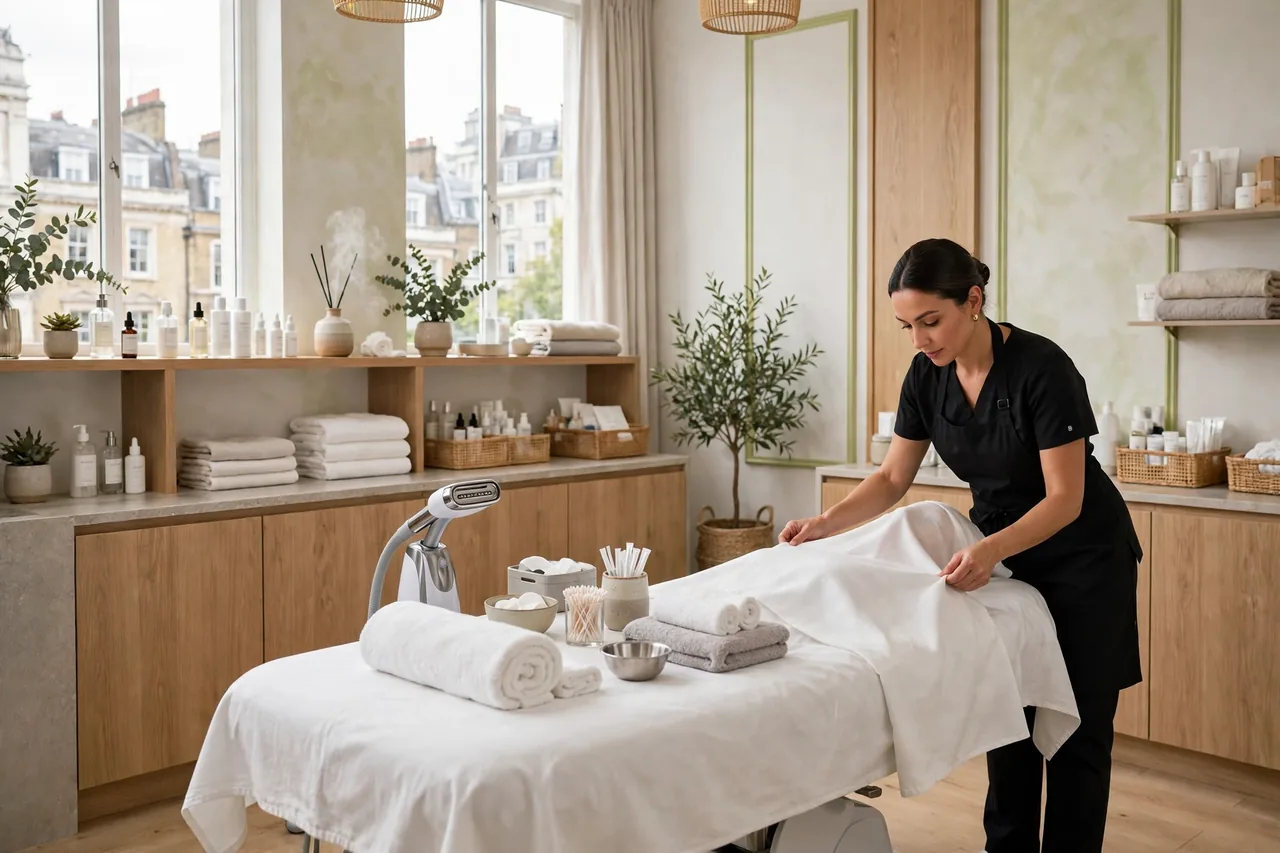
Knowing what to expect removes much of the anxiety around a first visit. Most clinics begin with a consultation in which the practitioner asks about your skin history, current products, medications and any previous treatments. Many use diagnostic lamps or imaging tools to look beneath the surface of the skin, checking hydration, pigmentation and sun damage that the naked eye misses.
From there you should receive a written or clearly explained plan: what treatment is recommended, in what order, over what timeframe, and what it will cost across the whole course rather than per session alone. Policies on consultation fees vary, and some clinics redeem them against treatment, so ask upfront. You should never feel obliged to decide on the spot; a good clinic will happily let you go away and think.
How to Check a Clinic’s Credentials
Because parts of the aesthetics industry remain lightly regulated, doing your homework matters. Look for practitioners with recognised qualifications in skincare or aesthetics, and check whether the clinic is transparent about who performs each treatment. A reputable clinic will happily explain the training behind its team.
It also helps to understand the science behind the treatments on offer. Our explainer on beauty research and the science behind modern skincare covers how ingredients and technologies are tested, which makes it easier to spot exaggerated claims. Clinics that talk honestly about realistic timelines and gradual results are usually more trustworthy than those promising overnight transformations.
Questions to Ask at Your Consultation
A good consultation is a conversation, not a transaction. Before committing to a course of treatments, ask what the practitioner recommends for your skin type and why, how many sessions they expect you to need, and what downtime, if any, is involved. Ask what products you should pause before treatment, and what aftercare is included.
You should also ask how the clinic handles problems. Skin can react unpredictably, and a professional clinic will have a clear process for reviews and follow-up appointments. If you feel rushed, pressured into buying a package, or unable to get straight answers, treat that as a warning sign and look elsewhere.
Matching Treatment to Your Skin Goals
Different concerns need different approaches. Congested, breakout-prone skin often responds well to deep-cleansing facials and gentle peels. Dullness and uneven tone may call for exfoliating treatments and brightening programmes, while fine lines are often addressed with microneedling or collagen-supporting therapies. Sensitive skin needs the most cautious route of all, with patch tests and gradual introductions.
Trends move quickly in the capital, and our round-up of beauty trends in the UK shows how quickly new treatments arrive. A good clinic will tell you honestly whether a trending treatment suits your skin or is simply fashionable. That honesty is worth more than the newest machine.
Most meaningful improvements come from a short course of treatments rather than a single session, supported by home care between appointments. Your practitioner should explain why a course is recommended, what maintenance will look like afterwards, and when to review progress. Skin renews itself slowly, and honest clinics build that biology into their timelines instead of fighting against it.
Red Flags to Avoid
Be wary of clinics that advertise dramatic results with no consultation, offer injectable treatments without a medical assessment, or refuse to tell you which products and devices they use. Unverifiable before-and-after photos, pressure to pay for long courses upfront, and practitioners who cannot explain the risks of a treatment are all reasons to walk away.
Price should not be your only guide either. Very cheap treatments often mean diluted products, rushed appointments or under-qualified staff. Equally, the most expensive clinic is not automatically the best. Look for value in the quality of the consultation, the clarity of the plan and the standard of aftercare.
Making Your Results Last
Clinic treatments work best alongside a sensible home routine. Daily sun protection, gentle cleansing and consistent use of the products your practitioner recommends will protect your investment far better than an ever-expanding shelf of purchases. Our guide to sustainable beauty has practical ideas for simplifying your routine without compromising results.
For a more indulgent complement to clinical care, London’s growing head spa scene is worth exploring; our guide to London head spas and Japanese scalp treatments explains what to expect. Whether you choose a clinic, a salon or a spa, the principle is the same: understand your skin, choose qualified hands, and give any treatment time to work before judging it.