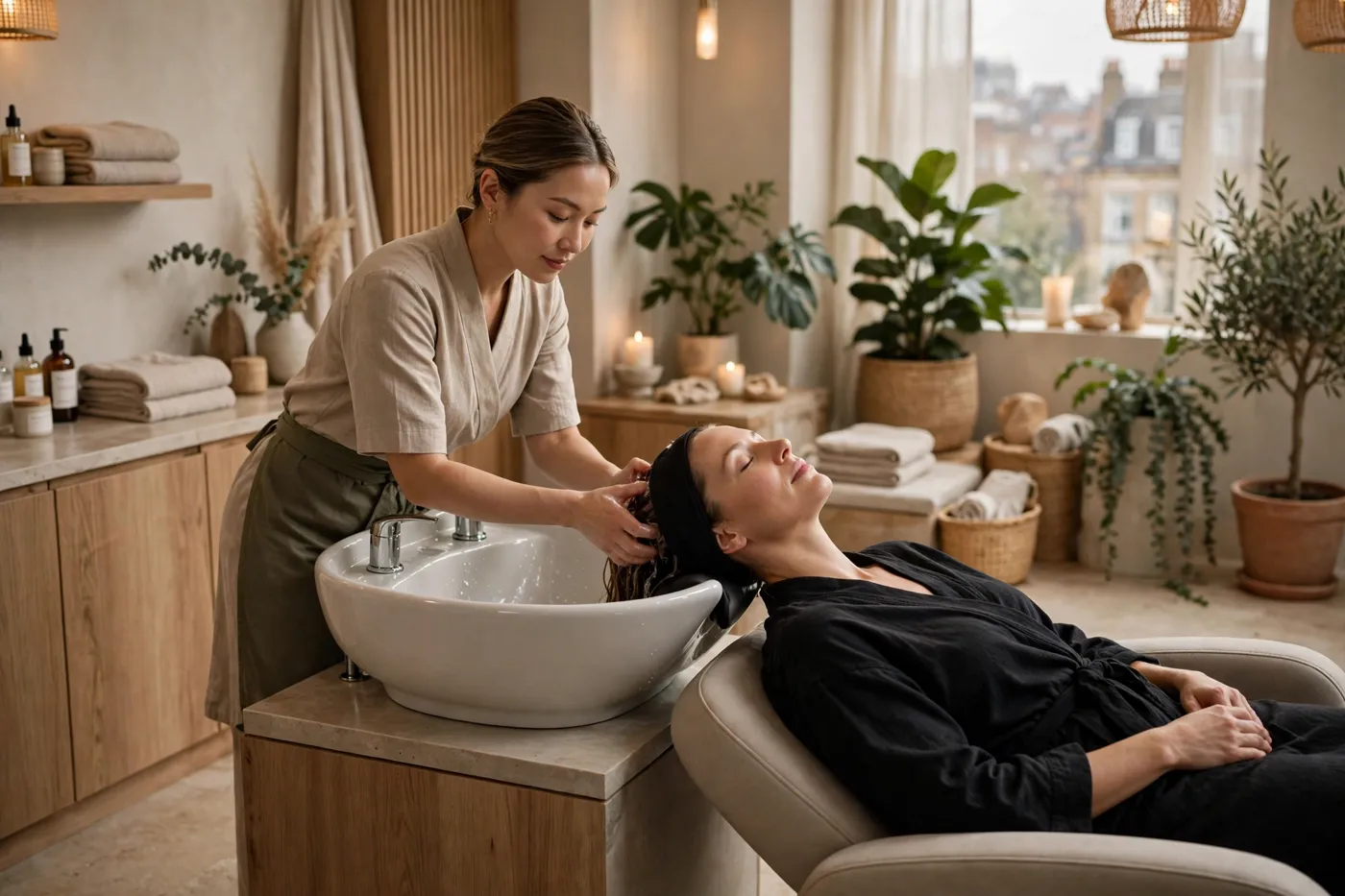
A head spa London treatment is one of the quieter beauty trends to arrive in the capital in recent years. Inspired by Japanese scalp-care rituals, it combines deep scalp cleansing, massage and relaxation into a single unhurried session. If you have only heard the term in passing, or you have seen the calming videos online and wondered what actually happens in the chair, this guide explains what a London head spa involves, who it suits, what to look for when choosing one, and how it fits into a wider hair and scalp care routine.
What Is a Head Spa?
At its simplest, a head spa is a treatment devoted entirely to the scalp and hair. Where a normal salon visit focuses on cutting, colouring or styling, a head spa session focuses on the health of the scalp itself. The idea comes from Japan, where scalp care has long been treated as part of personal grooming rather than an afterthought. A typical session works through several stages: the scalp is examined, cleansed with specialist products, massaged to encourage circulation, steamed or treated with warm water, and then rinsed and dried. The whole experience is deliberately slow and relaxing, and many people describe it as closer to a spa treatment than a salon appointment.
The reason scalp care matters is straightforward. Healthy hair grows from a healthy scalp, and the scalp is skin. It can become dry, oily, irritated or congested, just like the skin on the face. Product build-up, hard water, pollution on a city commute and infrequent washing can all leave residue sitting on the scalp. A head spa aims to clear that build-up properly, using techniques and equipment that go beyond an ordinary shampoo at the basin.
What Happens During a London Head Spa Session?
Although every salon runs its own version of the treatment, most London head spa sessions follow a similar pattern. Understanding the stages in advance helps you know what you are paying for and whether a treatment is the real thing or simply a longer wash.
The session usually begins with a consultation and a close look at the scalp. The therapist may use a small magnified camera so you can both see the condition of the scalp, including dryness, oiliness or flaking. This step matters because it shapes the products used later. A scalp that is dry needs different care from one that is oily, and a good therapist will explain what they can see rather than simply proceeding with a standard routine.
Next comes cleansing. The hair is washed thoroughly, often more than once, with products chosen for your scalp type. Some treatments include a gentle exfoliation to lift dead skin and product residue. This is followed by the signature part of the treatment: a long, slow scalp massage. The massage is both relaxing and practical, since it helps work products through the hair and encourages blood flow to the scalp. Many sessions then use warm water rinsing through a specialist basin, sometimes with steam, before a final conditioning treatment and a careful blow dry.
Sessions vary in length. A shorter treatment may take under an hour, while a full multi-step experience can run considerably longer. When comparing options, session length is one of the most useful things to check, because it usually explains much of any difference in price between two salons.
Japanese Head Spa Treatments and Their Appeal
Much of the interest in head spas comes from the Japanese-inspired approach at their core. In Japan, scalp care sits alongside skincare as a routine part of looking after yourself, and the treatments reflect that philosophy: thorough, gentle and methodical rather than rushed. The multi-step format, with its emphasis on cleansing, massage and relaxation in sequence, is what sets a head spa apart from simply asking a salon for a longer wash.
Part of the appeal is also sensory. Warm water, dimmed lighting, quiet rooms and an unhurried pace make the treatment genuinely restful, and many people book it as much for the relaxation as for the hair benefits. That combination is one reason the treatment has become one of the more talked-about beauty trends in the UK, and why it sits naturally alongside the wider shift towards slower, more considered beauty routines. If you are interested in how these habits are changing, our guide to sustainable beauty looks at the same move towards gentler, more thoughtful personal care.
Who Benefits Most from a Head Spa?
A head spa is not a medical treatment, and it is important to be clear about that. It will not cure hair loss, scalp conditions or skin disorders, and anyone with a persistent scalp problem, soreness, broken skin or sudden hair shedding should speak to a doctor or dermatologist first rather than booking a spa treatment. Within those limits, though, many people find a head spa useful.
It tends to suit people who use a lot of styling products and feel build-up on the scalp, people with dry or tight-feeling scalps, and anyone whose hair feels dull despite regular washing. It can also suit people who simply want a deeply relaxing treatment that leaves their hair feeling genuinely clean. City living adds its own case: pollution, hard water and frequent washing can all take a toll on the scalp over time, and a periodic deep clean can feel like a reset. The research behind modern skincare increasingly treats the scalp as an extension of facial skin, which supports the idea that it deserves the same kind of considered care.
How to Choose a Head Spa in London
With head spas becoming more widely available, quality varies. A few checks help you choose well and avoid paying head-spa prices for an ordinary wash with a new name.
First, look for a proper consultation. A genuine head spa should start by examining your scalp and asking about your hair routine, sensitivities and what you want from the treatment. If a salon offers no consultation and no explanation of the steps involved, that is a warning sign. Second, ask exactly what the session includes and how long it lasts. A treatment described in detail, with named stages and a clear duration, is more likely to be the real thing than one sold only on relaxing imagery.
Third, consider hygiene and comfort. The basin, towels and tools should be clean, the room should feel calm rather than chaotic, and the therapist should be happy to explain the products being used, especially if you have sensitive skin or allergies. Fourth, think about location and practicality. London is a large city, and a treatment that requires a long journey across town is one you are less likely to repeat. Choosing somewhere convenient makes it easier to build scalp care into a routine rather than treating it as a one-off. Our guide to choosing the best beauty salons in London covers the same ground in more depth, including how to judge a salon before you book.
Finally, be realistic about results. One session can leave hair feeling cleaner, softer and lighter, and the scalp feeling refreshed. It is unlikely to transform hair permanently, and any salon promising dramatic regrowth or a cure for a scalp condition should be treated with caution. The honest benefit is maintenance: a clean, comfortable scalp and hair that is easier to manage between salon visits.
How Often Should You Have a Head Spa?
There is no single right answer, because it depends on your scalp, your hair routine and your budget. Some people go monthly as part of a regular beauty routine, while others book a session every few months or before a special occasion. People who use heavy styling products, wash infrequently or live with hard water may feel the benefit more often than people with a simple routine and no scalp concerns.
A sensible approach is to try one session, notice how your scalp and hair feel in the following weeks, and then decide. If the difference fades quickly, a shorter interval may suit you. If your scalp stays comfortable for a long time, occasional treatments may be enough. Either way, a head spa works best alongside everyday care: gentle washing, avoiding excessive heat and product overload, and paying attention to how your scalp responds to new products. That everyday side of beauty is part of a wider story, and how beauty culture in Britain has evolved shows how routines like this have moved from niche interest to mainstream habit.
Head Spas and the Wider Beauty Picture
Head spas sit at the meeting point of several larger shifts in beauty: more attention to scalp health, more interest in Japanese and Korean beauty rituals, and more demand for treatments that offer relaxation as well as visible results. The UK beauty market continues to grow and diversify, and treatments that once seemed unusual are becoming part of ordinary salon menus. Whether head spas remain a distinct treatment or gradually fold into standard salon services, the underlying idea is likely to stay: the scalp deserves proper care, not just whatever shampoo happens to be nearest.
If you are thinking of trying one, start with the checks in this guide, choose a salon that explains its treatment clearly, and go in with realistic expectations. A good head spa should leave you relaxed, with a clean, comfortable scalp and hair that feels genuinely refreshed. That, rather than any dramatic promise, is the real point of the treatment, and it is why so many Londoners are adding it to their beauty routines.