A good blazer is one of the hardest working pieces in a wardrobe. It can sharpen a work outfit in the morning and dress up jeans in the evening, and it does both without any real effort. Learning how to style a blazer is less about following strict rules and more about knowing which combinations feel right for your day.
The trick is fit first, outfit second. A blazer that fits well across the shoulders, with sleeves that end at your wrist and a length that covers your waistband, will look good with almost anything. A blazer that pulls or sags will fight every outfit you pair it with, however expensive it was.
This guide covers the combinations that work best, for the office and for the weekend, with practical tips you can use straight away.
Start With the Right Fit
Before you think about outfits, check the fit. The shoulder seam should sit exactly on your shoulder, not drooping down your arm and not pulling inwards. You should be able to button the blazer without it gaping, and the sleeves should show about a centimetre of shirt cuff if you are wearing one.
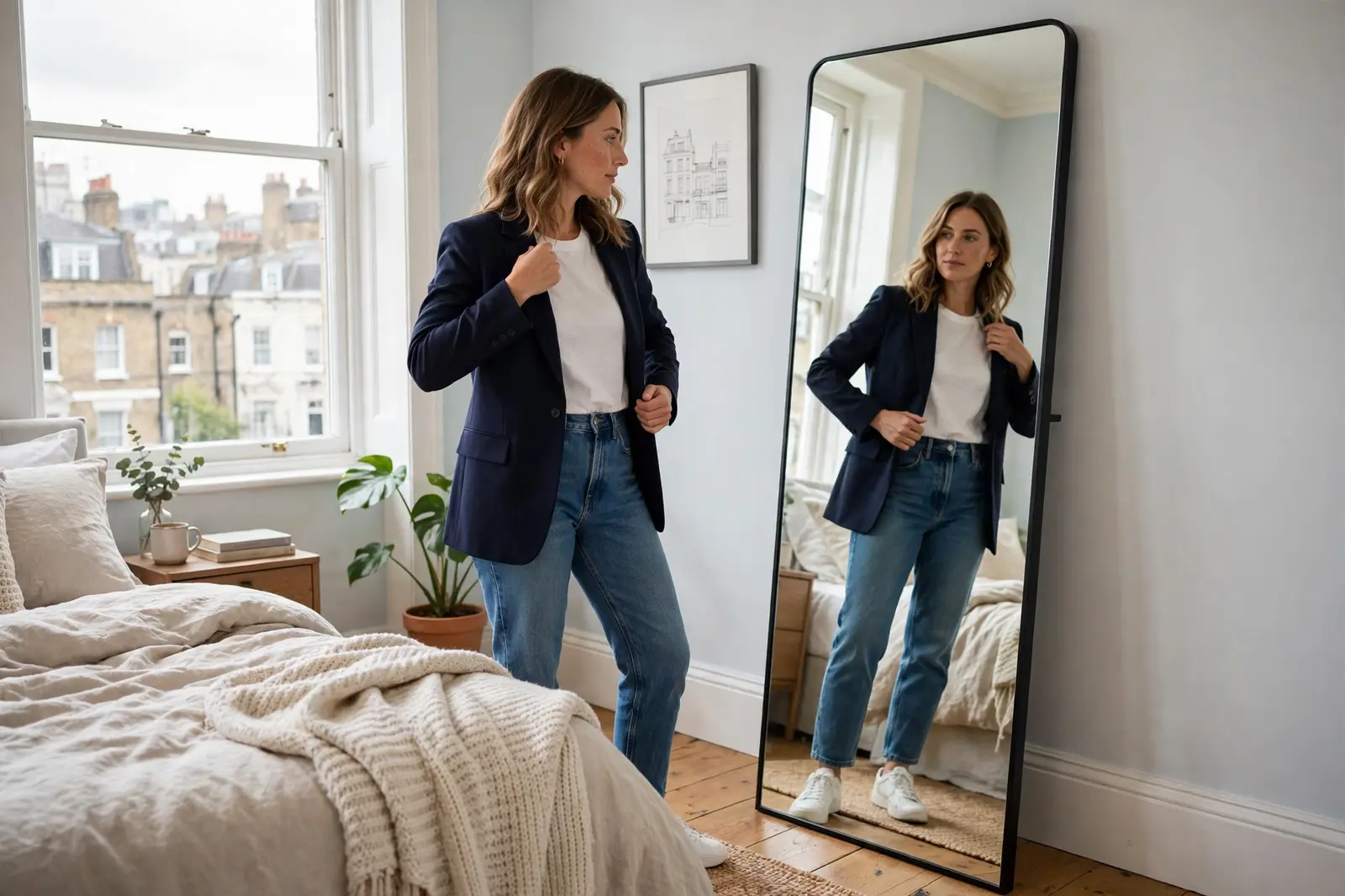
Length matters too. A classic blazer ends around the hip, which suits most people and most outfits. A longer blazer can look smart over slim trousers, while a cropped blazer works well with high-waisted jeans or skirts. Try a few lengths in front of a mirror before you commit to one style.
If you find a blazer you love that is almost right, a tailor can fix small issues cheaply. The same idea applies to skincare. Small, consistent fixes beat expensive overhauls, and the science behind modern skincare explains why. Shortening sleeves or taking in the waist costs far less than buying a new blazer, and it turns a good buy into a great one.
Blazer Outfits for Work
For the office, keep the base simple and let the blazer do the talking. A navy blazer over a white shirt and tailored trousers is a combination that has worked for decades, and it still works. It works for the same reason a well-chosen rug anchors a living room. One strong piece pulls the rest together. Add plain court shoes or loafers, and you have an outfit that suits most workplaces.
A grey or charcoal blazer is just as useful. Pair it with a fine-knit top and slim black trousers for a softer look that still reads as professional. If your office is more relaxed, swap the shirt for a plain T-shirt in a neutral colour and keep the trousers tailored. The blazer keeps the whole outfit smart, even with a casual top underneath.
Real example: a marketing manager in London wears the same navy blazer three days a week, changing only what sits underneath. Monday is a white shirt and trousers, Wednesday is a striped top and dark jeans, Friday is a plain tee and wide-leg trousers. One blazer, three different outfits, and nobody notices the repeat because the rest of the look keeps changing.
Blazer Outfits for the Weekend
At the weekend, the blazer becomes a layer, not a uniform. Throw a relaxed blazer over a T-shirt and straight-leg jeans, add trainers or ankle boots, and you have an outfit that looks put together without trying too hard. A linen or cotton blazer works best here, because the softer fabric matches the mood.
Try an oversized blazer with a slip dress or a midi skirt for a look that feels current without being fussy, and keep the rest of the outfit simple, the way a calm bedroom uses plain bedding to let one pattern stand out. The same thinking works outdoors too. A garden that feels relaxed rather than formal is more inviting, and a few simple garden decor ideas can create that feeling at home. Roll the sleeves to the elbow to make it feel more casual. A belt bag or a small cross-body bag keeps the outfit practical for a day out.
Colour is your friend at the weekend. A camel, sage or soft pink blazer can lift a plain outfit of jeans and a white top into something that looks deliberate. Colour confidence comes with practice, and the same is true when you choose colours for your home. Bedding and soft furnishings are a low-risk place to try a new palette before you wear it. Start with one coloured blazer and see how often you reach for it before buying more.
Choosing Colours and Fabrics
If you are buying your first blazer, navy is the safest choice. It goes with black, grey, white, denim and most colours, and it works in every season. Black is a close second, though it can look harsh in bright daylight. Grey is the most forgiving of the three, and it hides creases well.
Fabric matters as much as colour. Wool blazers hold their shape and suit cooler months. Linen and cotton blends breathe better in summer but crease more easily. A blazer with a little stretch is more comfortable for long days, especially if you sit at a desk.
For winter, a heavier wool blazer over a fine roll neck is a combination that keeps you warm and looks polished. For summer, an unlined linen blazer over a vest top and linen trousers feels light and looks effortless.
Small Details That Make a Big Difference
The way you wear a blazer changes the whole outfit. Leave it unbuttoned for a relaxed look, or button the middle button only for a sharper shape. Never button the bottom button of a two or three button blazer. It is a small rule, but it makes a visible difference.
Accessories should stay simple. A delicate necklace, a classic watch, or a silk scarf is enough. The same restraint works for beauty. A simple makeup look lets the outfit lead, and current beauty trends favour exactly that kind of simplicity. Too many extras compete with the blazer and make the outfit look busy. Let one thing stand out at a time.
Keep the blazer in good shape. Hang it on a proper hanger, not a wire one, and brush it down after wearing. A quick steam removes creases far better than ironing, which can flatten the lapels over time.
Blazer Mistakes to Avoid
A few common mistakes can spoil an otherwise good blazer outfit. The first is wearing a blazer that is too tight. If the button pulls or the lapels gape, the blazer is too small, however much you like it. Size up, or choose a more relaxed cut.
The second is matching the blazer and trousers too closely when they are not a suit. A navy blazer with navy trousers in a slightly different shade looks like a suit that does not match, which is worse than either piece on its own. Pair navy with grey, black or denim instead, and keep the shades clearly different.
The third is overloading the outfit. A blazer is already a strong piece, so it does not need a loud shirt, a statement necklace and bold shoes all at once. Pick one focal point and keep the rest quiet. If the blazer is patterned, wear a plain top. If the top is bright, keep the blazer neutral.
One Blazer, Many Outfits
The best thing about learning how to style a blazer is realising how little you need. One well-fitting blazer in navy, worn five different ways, covers most of the week. Add a second in a lighter colour or a softer fabric, and you have a small wardrobe that works much harder than a rail full of clothes you never reach for.
Start with fit, keep the base simple, and let the blazer earn its place. Once you find the combinations that suit you, getting dressed in the morning gets noticeably easier.