
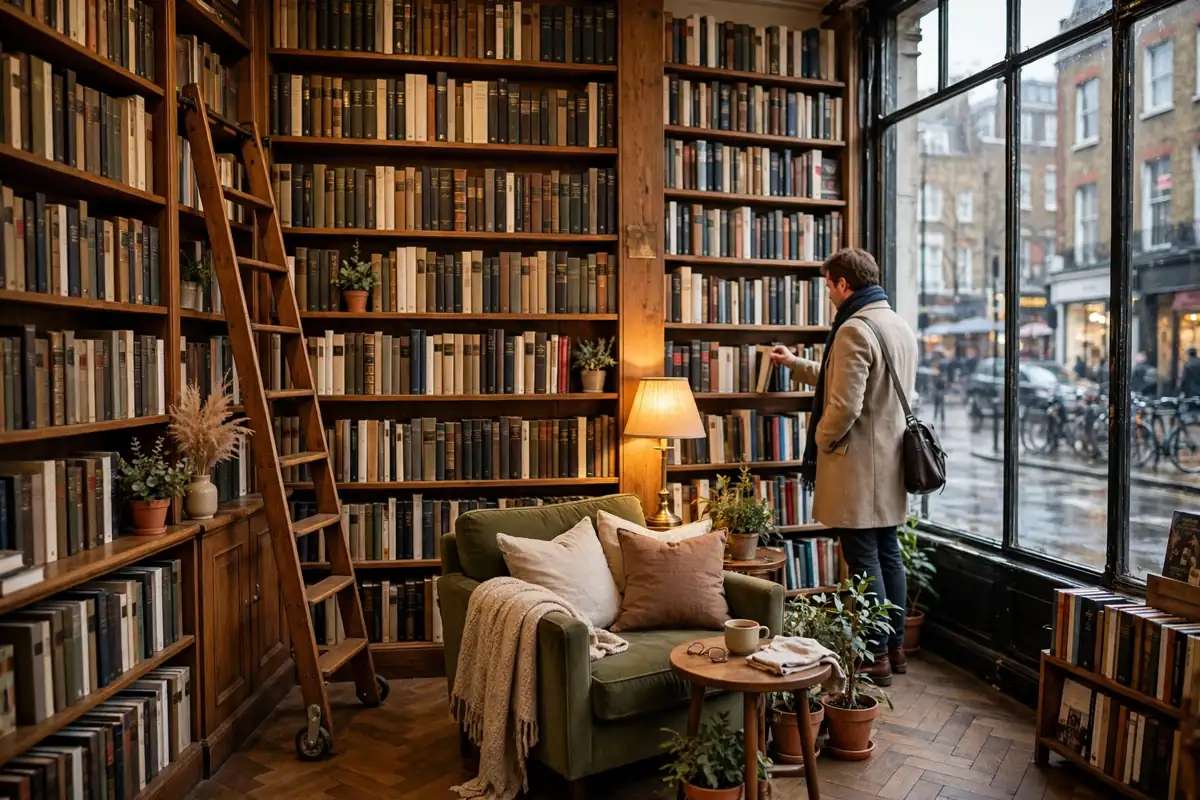
London is a city built on stories, and few places tell that story better than its bookshops. Beyond the big chains, independent bookshops in London survive — and thrive — in neighbourhoods across the capital, each with its own character: shelves chosen by people who read obsessively, staff who can recommend the book you did not know you were looking for, and a calendar of readings and launches that turns a shop into a small cultural centre. Whether you are a lifelong reader, a writer looking for inspiration, or a visitor who wants to understand the city beyond its landmarks, this guide will help you explore London’s indie bookshop scene and get more from every visit.
Why Independent Bookshops Matter to London
An independent bookshop is not simply a smaller version of a chain store. Its stock reflects the taste of its booksellers and the interests of its neighbourhood, which is why two shops a mile apart can feel completely different. One might lean into political history and small-press poetry; another might specialise in children’s picture books, translated fiction or art and photography. That curation is the point: instead of an algorithm showing you more of what you already like, a good bookseller puts something unexpected in your hands.
These shops also anchor local literary life. Many host evening events, book clubs, writing groups and children’s story sessions. For writers, they are a reminder that books end up in real rooms with real readers; for readers, they are one of the few remaining places where browsing is an experience in itself rather than a search box.
The Kinds of Bookshops You Will Find
London’s independents fall into a few broad families. General independents carry a wide range with strong fiction and non-fiction sections, and they are the backbone of most neighbourhoods. Specialist shops go deep on one subject — travel, maps, art, design, radical politics, romance, crime or children’s books — and reward anyone who shares the obsession. Second-hand and antiquarian shops are a different pleasure again: slower, dustier, and full of out-of-print editions and forgotten titles at gentle prices. Many readers plan a route that mixes all three, treating the day as part shopping, part treasure hunt.
Neighbourhoods Worth a Bookish Walk
Certain areas make natural bookshop walks. Bloomsbury, long associated with publishers and writers, suits an afternoon that pairs bookshops with museum visits. North London neighbourhoods such as Islington, Crouch End and Stoke Newington combine strong independents with cafés made for reading your purchases. South of the river, areas around Clapham, Dulwich and Peckham have built loyal local scenes, while the streets near Charing Cross Road remain famous for second-hand and specialist shops. You do not need a fixed list to enjoy this: pick a neighbourhood, find its bookshop, and let the surrounding streets fill the rest of the afternoon.
How to Get More From a Bookshop Visit
Go in with one intention and one open mind. Tell the bookseller the last book you loved and ask what they would read next — this is the single easiest way to discover something an algorithm would never surface. Look at the staff-picks shelves and the local-interest table, where you will often find London histories, walking guides and small-press titles that never reach the big stores. Check the events board before you leave: readings and launches are usually inexpensive, sometimes free, and they turn a solitary hobby into a social one.
If you write, treat good bookshops as research. Notice which sections are expanding, how debut novels are displayed, and what readers actually pick up. There is no better market education than watching a well-run shop for half an hour.
Many readers also come home determined to build a proper reading corner of their own. If that is you, our guide to sofa cushions will help you style a chair or sofa you can genuinely spend a whole Sunday in, while our home decor ideas cover the shelves, lighting and finishing touches around it. Come autumn, our Halloween home decor ideas even show how to give that corner a seasonal twist for the darker evenings.
Planning Your Own Bookshop Crawl
A bookshop crawl is simply a walk that strings several shops together, and London is one of the easiest cities in the world to do it in. Choose a starting neighbourhood and plot three or four shops within a mile or so of each other, then walk between them slowly, treating the streets as part of the entertainment. Give each shop a purpose: the first for browsing new fiction, the second for a specialism you care about, the third for second-hand serendipity. Set yourself one playful rule — a book by an author you have never read, a title chosen purely for its cover, a recommendation accepted without checking reviews — because crawls work best when they leave room for accident.
Practical touches make the day. Go on a weekday morning if you can, when shops are quiet and booksellers have time to talk. Carry a tote bag, but an honest one: part of the pleasure is staggering home slightly overburdened. Note the shops you liked and what you bought where; regulars build a mental map of the city measured in bookshops rather than stations, and it changes how the whole place feels. Finish in a café or pub with the top book from your pile. Few days out in the capital cost less or age better.
Supporting the Shops You Love
Independent bookshops operate on thin margins, so how you buy matters. Ordering a book through your local shop — in person or via its website — usually gets it to you within a day or two while keeping the money in the neighbourhood. Subscriptions and gift tokens make excellent presents and give shops reliable income. Attending events, joining a book club, and simply choosing the shop over a discount giant for your regular reading all help. Many shops also run loyalty schemes and pre-order campaigns for major releases, which are worth asking about.
Making a Day of It
A bookish London day needs little planning: choose two or three shops within walking distance of each other, add a café stop for every purchase you intend to start reading immediately, and leave space in your bag. Start in the morning when shops are quiet and staff have time to talk recommendations, and finish with an event or a reading in a pub garden if the season allows. You will come home with books, of course — but also with a sharper sense of the city, one neighbourhood at a time.
That is the real gift of independent bookshops in London. They slow the city down, put judgement and enthusiasm back into choosing what to read, and remind us that literature is a local, human business. Wander in, ask a question, and leave with the book you never knew you needed.