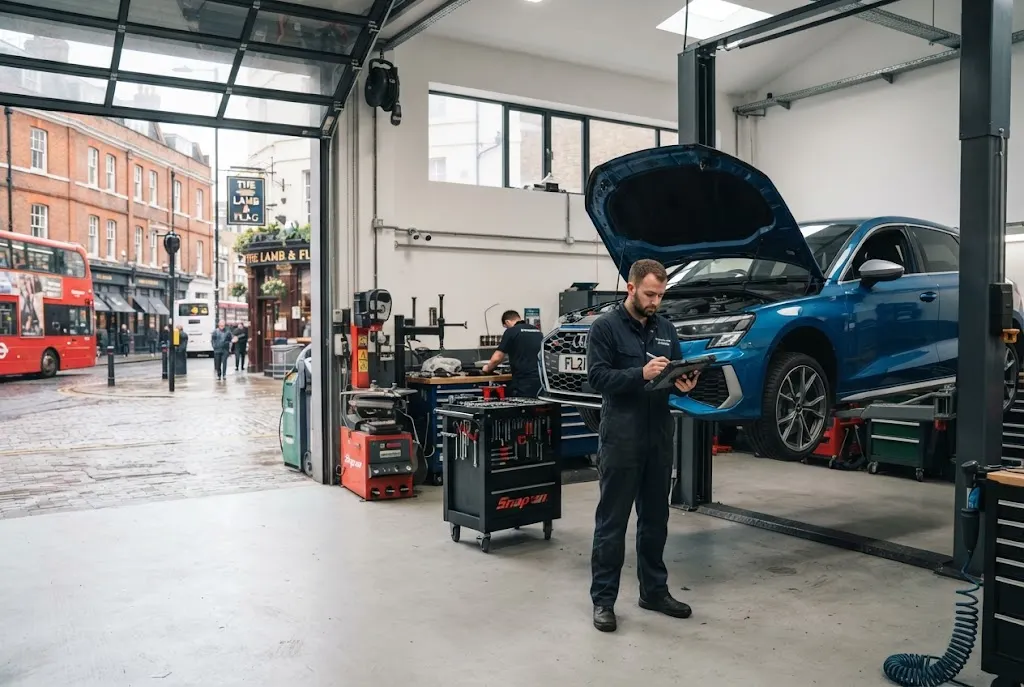
Understanding car service cost is an important part of managing vehicle ownership in London. Servicing prices can vary significantly depending on the vehicle, the type of service required, parts used, labour rates and the condition of the car. For motorists dealing with busy commutes, family transport or regular journeys across the capital, knowing what influences the price can make maintenance expenses easier to plan.
A service is also different from an unexpected repair. Routine maintenance is intended to keep a vehicle in suitable condition, while repairs address faults or worn components that need attention. Understanding this distinction can help drivers compare quotations more effectively and avoid treating every garage bill as the same type of expense.
What Affects Car Service Cost in London?
There is no universal price for servicing a vehicle. Two cars requiring attention on the same day can have very different costs because their maintenance schedules, engine specifications, parts and labour requirements may differ.
Several factors commonly influence the final bill:
- The make and model of the vehicle
- The vehicle’s age and mileage
- The type of service required
- Parts and consumables needed
- Labour rates charged by the provider
- Additional faults discovered during servicing
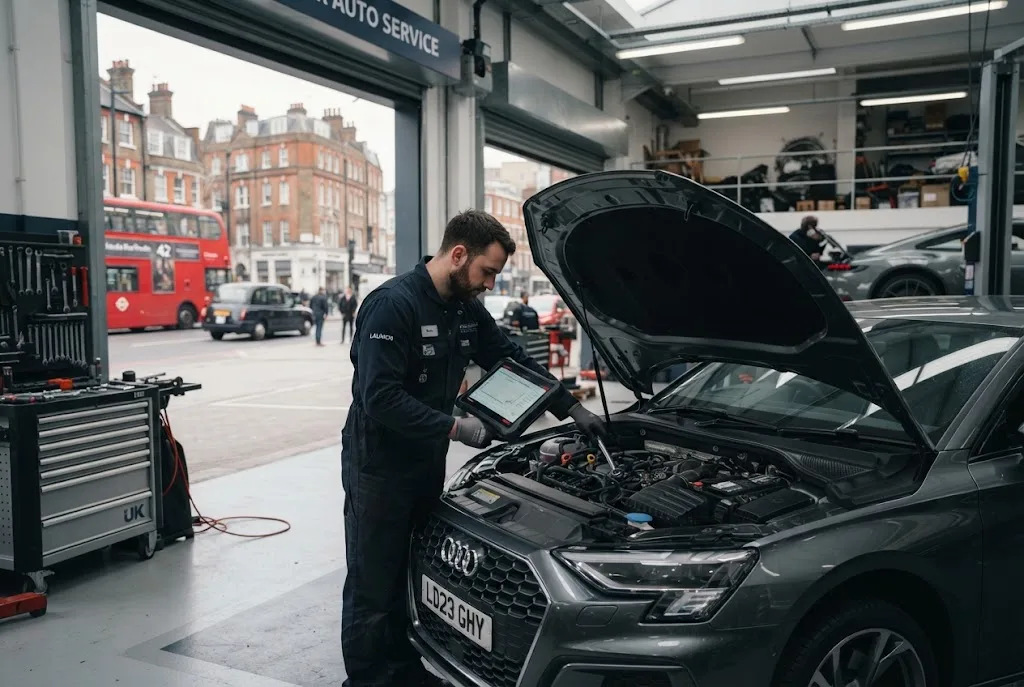
- Whether specialist diagnostic equipment is required
- The location and operating costs of the garage
For this reason, motorists should be cautious about comparing two service prices purely by headline cost. A cheaper quote may cover a narrower scope of work, while a higher quotation may include additional maintenance items.
Car Service Cost and Different Types of Servicing
Vehicle manufacturers commonly specify different maintenance requirements at different intervals. The exact schedule depends on the vehicle, so motorists should follow the manufacturer’s recommendations and their vehicle’s service information.
Routine Servicing
A routine service generally focuses on scheduled maintenance and checks. Depending on the vehicle and service plan, this can involve replacing certain filters or fluids, inspecting key components and checking for developing issues.
Because service schedules differ, drivers should ask exactly what is included before approving work. A clear quotation should make it easier to understand whether parts, labour and routine checks are included in the advertised price.
More Extensive Servicing
Some service intervals involve additional maintenance compared with a basic routine visit. Certain components may have replacement intervals based on mileage or time, meaning a larger service can cost more than a simpler maintenance appointment.
These higher costs do not necessarily indicate that a garage is charging excessively. The vehicle may simply require more work at that particular stage of its maintenance schedule.
London Garage Prices and Labour Rates
Labour is an important part of car service cost. Garages have different operating expenses, equipment, staffing requirements and specialist capabilities, all of which can influence their rates.
Location can also play a role. A garage operating in an expensive urban area may face higher premises and business costs than a workshop in another part of the country. However, location alone should not determine whether a quotation represents good value.
When comparing London garage prices, motorists should look at the complete quotation rather than focusing only on the hourly labour rate. Ask whether diagnostic time, inspection work and additional labour are charged separately.
Parts and Their Effect on Maintenance Costs
Parts can represent a significant proportion of a servicing or repair bill. The required components vary according to the vehicle and the work being performed.
Drivers should ask what parts are being proposed and whether the quotation includes them. Where there are legitimate options, a reputable provider should be able to explain the differences between available components rather than simply presenting an unexplained price.
It is also important not to judge a service entirely by the cheapest available parts. The suitability, specification and quality of a component can matter for vehicle reliability and safety.
Car Service Cost vs Repair Costs
Routine servicing and repair work should be considered separately when planning a motoring budget. A service may identify a worn component, but replacing that component can create an additional expense.
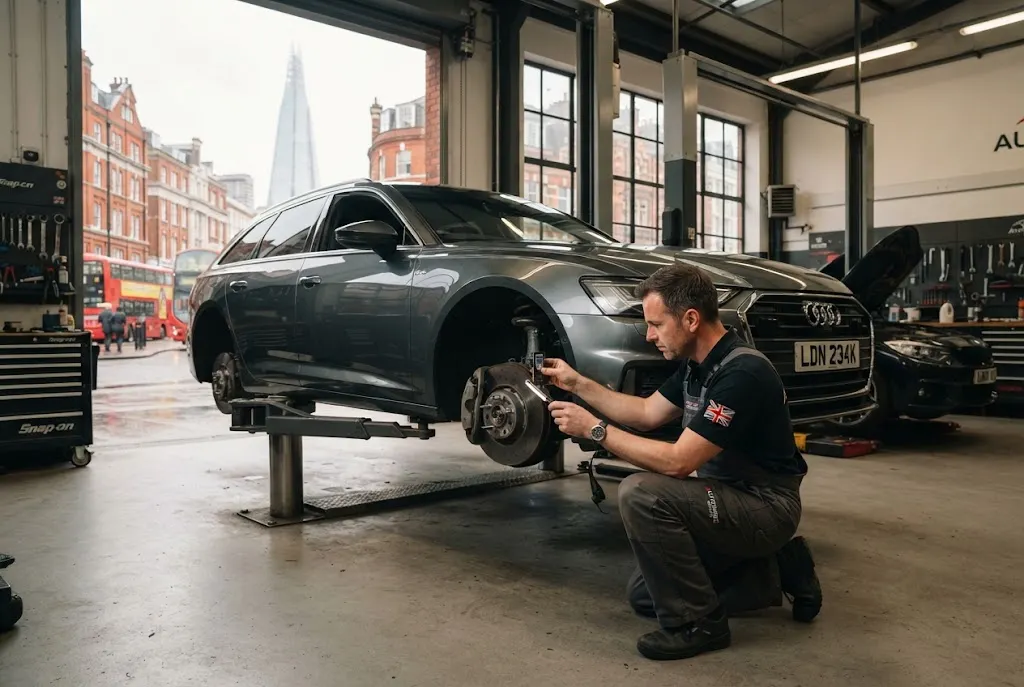
For example, a scheduled service could reveal that a vehicle needs attention to its brakes, tyres or suspension. The inspection itself does not necessarily mean those components were included in the original service price.
This is why motorists should ask for approval before additional work begins. A written quotation or clear explanation of recommended repairs can help the owner decide what needs immediate attention and what may be suitable for future planning.
Maintenance Costs for London Commuters
Commuters can place considerable demands on their vehicles. Repeated journeys through congestion, frequent braking and acceleration, short urban trips and high annual mileage can all influence maintenance requirements.
Drivers who rely heavily on their vehicles should therefore avoid planning their budget around servicing alone. Tyres, brakes, batteries, repairs and unexpected faults can all become part of the total cost of ownership.
Regular auto care services can support a preventative approach by helping motorists monitor their vehicles between major maintenance appointments.
How City Driving Can Influence Vehicle Expenses
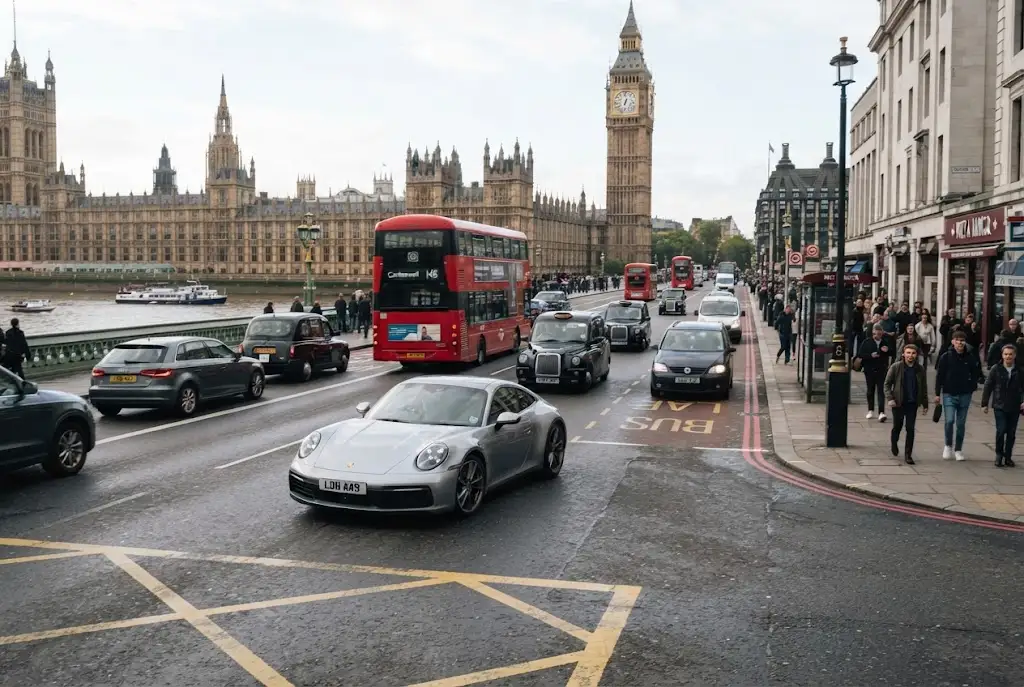
London’s roads create a particular driving environment. Stop-start traffic and frequent manoeuvring can contribute to wear, while potholes and kerbs can affect wheels, tyres and suspension.
Parking can create another source of expense. Minor scrapes may be cosmetic, but a significant kerb or pothole impact can sometimes affect components that are less obvious from the outside.
Understanding London motoring as a whole can therefore help drivers put their maintenance expenses into context. The cost of owning a car is influenced not only by servicing but also by how, where and how frequently the vehicle is driven.
Should You Choose a Main Dealer or Independent Garage?
Drivers may encounter different pricing structures when comparing main dealers with independent garages. Both can have advantages depending on the vehicle, service requirement and driver’s preferences.
A main dealer may have direct familiarity with a particular manufacturer’s vehicles and access to manufacturer-specific systems and procedures. An independent garage may offer a different pricing structure and can be experienced with a broad range of makes and models.
The important point is to compare what each quotation actually covers. Ask about the service level, parts, labour, diagnostics and any additional inspections rather than selecting a provider based solely on the lowest advertised figure.
How Vehicle Age and Mileage Affect Servicing Prices
Vehicle age and mileage can influence maintenance requirements. Older vehicles may require attention to components that would not normally be a concern on a newer car, while high-mileage vehicles can accumulate wear across several systems.
This does not mean an older vehicle is automatically expensive to maintain. Condition, maintenance history and the way the car has been used all matter. A well-maintained older vehicle can sometimes be more predictable to own than a poorly maintained newer one.
Keeping service records can help drivers understand what has already been replaced and what may be approaching its recommended maintenance interval.
Car Service Cost and Pre-Service Inspections
A vehicle inspection can be useful when a driver wants to understand the condition of a car before deciding what maintenance is necessary. This can be particularly relevant when purchasing a used vehicle or when a car has developed symptoms that are not explained by routine servicing.
Professional auto inspection services can help identify areas that may need further attention. An inspection does not necessarily mean that every identified issue requires immediate replacement; the urgency depends on the nature and severity of the problem.
For official information about MOT testing requirements, drivers can consult the GOV.UK MOT guidance. An MOT and a routine service serve different purposes, so motorists should not assume that passing one eliminates the need for the other.
Can Mobile Servicing Reduce the Cost of Ownership?
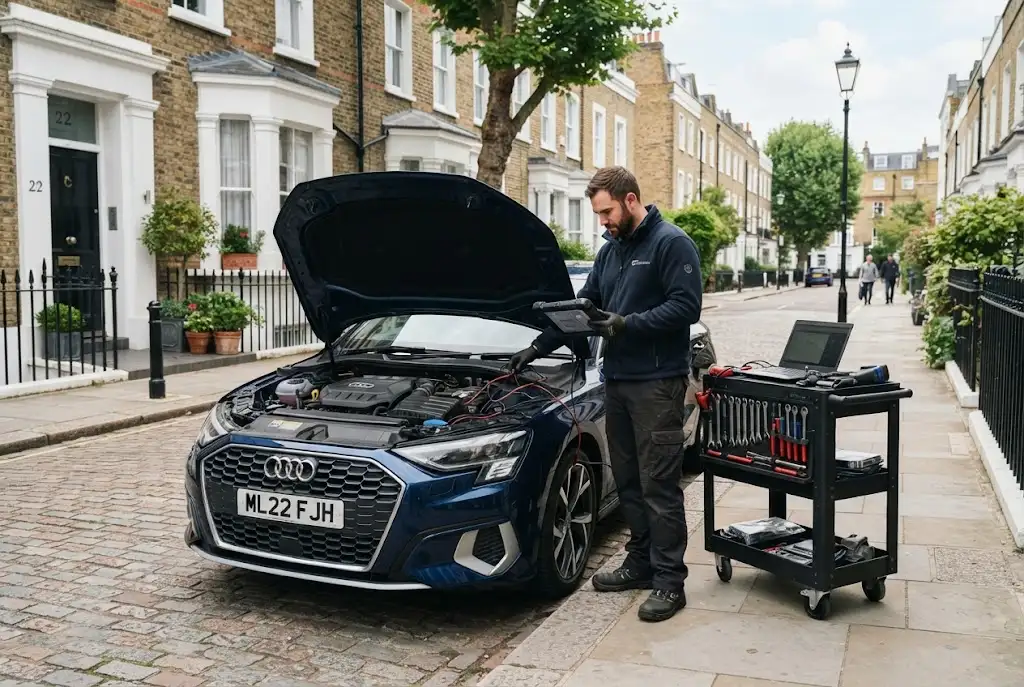
Mobile servicing can offer convenience by bringing a mechanic to a home, workplace or suitable roadside location. Whether it reduces the overall financial cost depends on the provider, the work required and any call-out or labour charges.
The main benefit may instead be time saved. A motorist who would otherwise need to travel to a garage, arrange alternative transport or take time away from work may find a mobile appointment more practical.
Where appropriate, a mobile auto service can therefore be another option when comparing ways to manage vehicle maintenance.
How to Compare Servicing Prices
Getting several quotations can help motorists understand the market, but the comparison should be made carefully. Ask each provider for the scope of the service and whether the quoted price includes parts and labour.
Useful questions include:
- What exactly is included in the service?
- Are parts included in the quoted price?
- Is VAT included?
- Are diagnostic checks included?
- Will additional repairs require approval?
- What type of parts will be used?
- Will the work be recorded in the service history?
Clear answers to these questions make it easier to compare like-for-like quotations.
Planning Maintenance Around a Household Budget
Vehicle maintenance can become easier to manage when motorists treat it as a predictable household expense rather than waiting for every cost to arrive unexpectedly.
Setting aside money for routine servicing, tyres and potential repairs can provide some protection against an inconvenient bill. Drivers can also review their previous maintenance history to identify recurring expenses and upcoming service intervals.
This approach is particularly useful for households where a vehicle is essential for commuting, family transport or work. Keeping the car operational may be financially important even when the immediate maintenance expense feels inconvenient.
Reducing Unnecessary Motoring Expenses
Preventative maintenance cannot eliminate every repair bill, but ignoring small problems can sometimes lead to more extensive work. Drivers should therefore pay attention to warning lights, unusual noises, changes in handling and other signs that the vehicle may need attention.
Simple driver checks also have a role. Monitoring tyre condition, keeping appropriate fluid levels and responding promptly to obvious problems can complement professional maintenance.
The goal should not be to spend money on unnecessary work. Instead, motorists should aim to understand which maintenance items are required, which are recommended and which issues need urgent attention.
Car Service Cost and Long-Term Vehicle Ownership
Looking only at the price of an individual service can give an incomplete picture of vehicle ownership. A better approach is to consider the longer-term cost of maintaining the vehicle in suitable condition.
A car that receives regular servicing may still require repairs, but a structured maintenance history gives the owner more information when making decisions. Conversely, repeatedly delaying maintenance can make future expenses harder to predict.
For drivers researching broader vehicle ownership and maintenance, vehicle checks provide another useful part of the overall picture.
Final Thoughts on Car Service Cost in London
Car service cost in London depends on far more than a single advertised price. Vehicle type, service requirements, parts, labour, mileage, condition and location can all influence what a motorist ultimately pays.
The most effective way to manage servicing prices is to understand exactly what is included, compare quotations on a like-for-like basis and keep a record of previous maintenance. Drivers should also distinguish routine servicing from repair work and ask for approval before unexpected additional work is carried out.
For London motorists, the wider cost of ownership also includes the effects of city driving, commuting, parking and everyday vehicle use. Combining sensible budgeting with regular servicing, inspections and preventative vehicle care can make those expenses more predictable and help drivers make better decisions about their cars over the long term.